




Dear Friend and Reader:
Twenty years ago this week, the International Astronomical Union (IAU), a private professional organization founded in 1919, decided that Pluto was not a planet. I don’t understand how they got that power; it is something of a mystery that I’ll eventually get to the bottom of.
But history records that on Aug. 24, 2006, the organization created a definition of planet that Pluto does not qualify for — nor does any other planet (including the Earth) because the definition is so ridiculous: it is impossible to fulfill.
This determination was allegedly based on the 2005 discovery of Eris, a planet comparable in size to Pluto, located way out in the outer solar system (at more than twice the distance of Pluto from the Sun). But really, the problems for Pluto started with the discovery of a planet familiar to many Planet Waves readers: 1992 QB1, which became known as minor planet (15760) Albion.
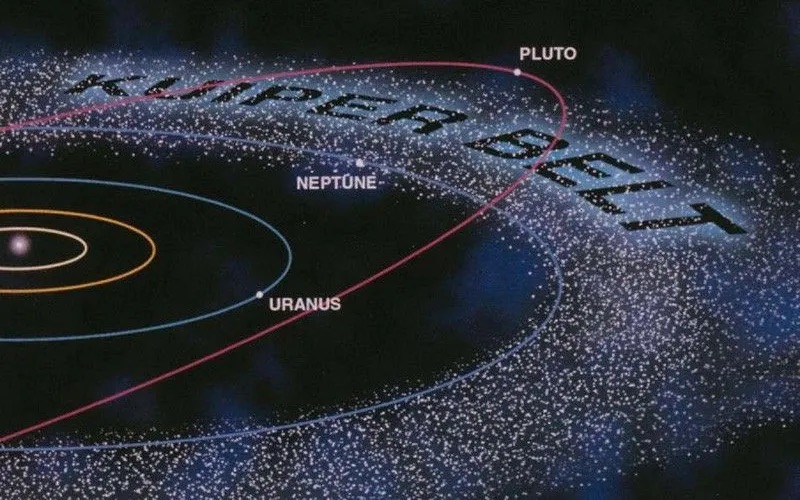
Existence of Kuiper Belt Finally Proven
QB1’s discovery confirmed the existence of the Kuiper Belt, a reservoir of small bodies in the neighborhood of Pluto left over from the creation of the solar system. The debate over its existence had gone on since the 1940s.
That was all it took: other astronomers, now believing that the Kuiper Belt existed, started looking for planets out there, and one of them was Mike Brown of Caltech.
Mike Brown may have discovered Eris, but he did not discover the Kuiper Belt. That was the work of Dave Jewett and his grad student Jane X. Luu at the University of Hawaii. (I give the details in this Planet Waves article from 2012.)
Other discoveries followed, but the 2000 discovery of Varuna by Robert McMillan was considered a major discovery; as was the 2002 discovery of Quaoar by Chad Trujillo and Mike Brown at Caltech. Then Mike and team discovered Sedna in 2003, and finally Eris in 2005. At the time, a good few astrologers cared about these discoveries and considered them as representing a frontier of consciousness.
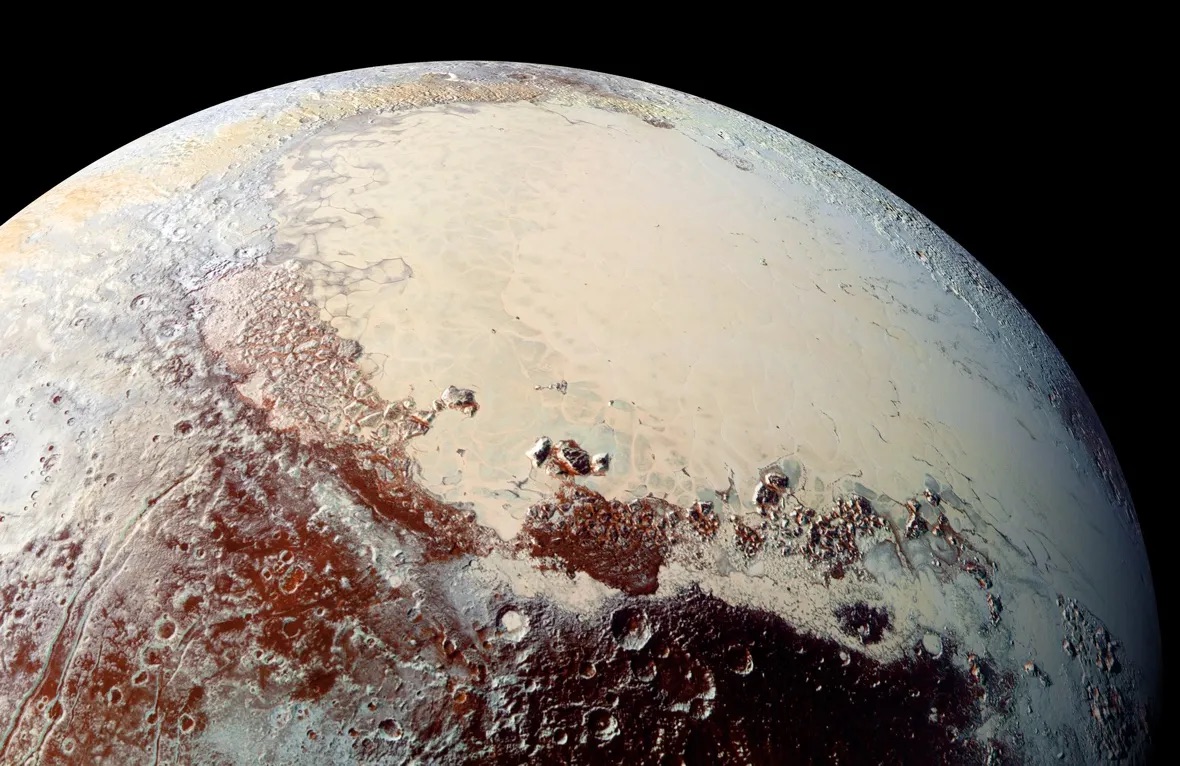
The Result of All of This
At the IAU 2006 meeting in Prague, Brown lobbied hard for the demotion of Pluto. Previously, he had argued that Pluto is a cultural planet, beloved by the people, and should retain planetary status. Professional ambition got the best of him. He later wrote a book called How I Killed Pluto and Why It Had It Coming.
At the time the vote was taken on Aug. 24, there was not a quorum (majority of members present) at the conference — but nobody made a quorum call.
“It’s an awful definition; it’s sloppy science and it would never pass peer review – for two reasons,” Dr. Alan Stern told BBC at the time. Stern was leading the New Horizons mission to get the first clear photos of Pluto.
“Firstly, it is impossible and contrived to put a dividing line between dwarf planets and planets. It’s as if we declared people not people for some arbitrary reason, like ‘they tend to live in groups’. Secondly, the actual definition is even worse, because it’s inconsistent.”
No Planet Has Cleared its Orbit
One of the three criteria for planethood states that a planet must have “cleared the neighborhood around its orbit.” The largest objects in the Solar System will either collect together material in their path or fling it out of the way with a gravitational swipe.
Pluto was disqualified because its highly elliptical orbit overlaps with that of Neptune.
BBC reported:
But Dr Stern pointed out that Earth, Mars, Jupiter and Neptune have also not fully cleared their orbital zones. Earth orbits with 10,000 near-Earth asteroids. Jupiter, meanwhile, is accompanied by 100,000 Trojan asteroids on its orbital path.
These rocks are all essentially chunks of rubble left over from the formation of the Solar System more than four billion years ago.
“If Neptune had cleared its zone, Pluto wouldn’t be there,” he added.
This Has Implications for Astrology
This has implications for astrology, but astrology does not seem interested. Eris is largely a boutique item, written off as just another asteroid. There is just one presentation on Eris at the forthcoming United Astrology Conference, wherein it is described as “the archetype of the 21st century.”
I did not know centuries had archetypes. Anyway you might think that the reordering of the solar system and the reclassification of planets might get some attention at an international astrology conference. It will, at my free breakfast sessions.
The epochal conjunction of Chiron and Eris in 2025 and 2026 was largely ignored by astrologers; a few referenced it. Planet Waves covered this conjunction for years.
The conjunction is integral to understanding the crisis falsely being called “A.I.” — which is really about synthetic thought and identity. Eris is involved in major transformations in communication technology (including the Gutenberg printing press, invented under the 1440 conjunction of Chiron and Eris in Aries).
And what of Pluto, now that it’s been declared minor planet (134340) Pluto? Let’s take that up next week.
with love,